about us

The Multireligious Institute of Mercy has its origins in the singular articulations between justice and mercy within the world’s different spiritual traditions. It was created in the wake of the Abu Dhabi Declaration. (cf. excerpt on justice and mercy for the dialogue)co-signed in 2019 by Pope Francis and the Grand Imam of Al-Azhar Ahmad Al-Tayyeb, then ratified by major religious traditions at the Astana meeting in 2022.

The Institute highlights justice and mercy as two inseparable pillars for the deployment of a fraternity founded on human dignity.

Like an oasis, the Institute aims to be a meeting place where the water of mercy gushes forth, in order to irrigate fraternity in the world and enable believers to drink mutually from this source.

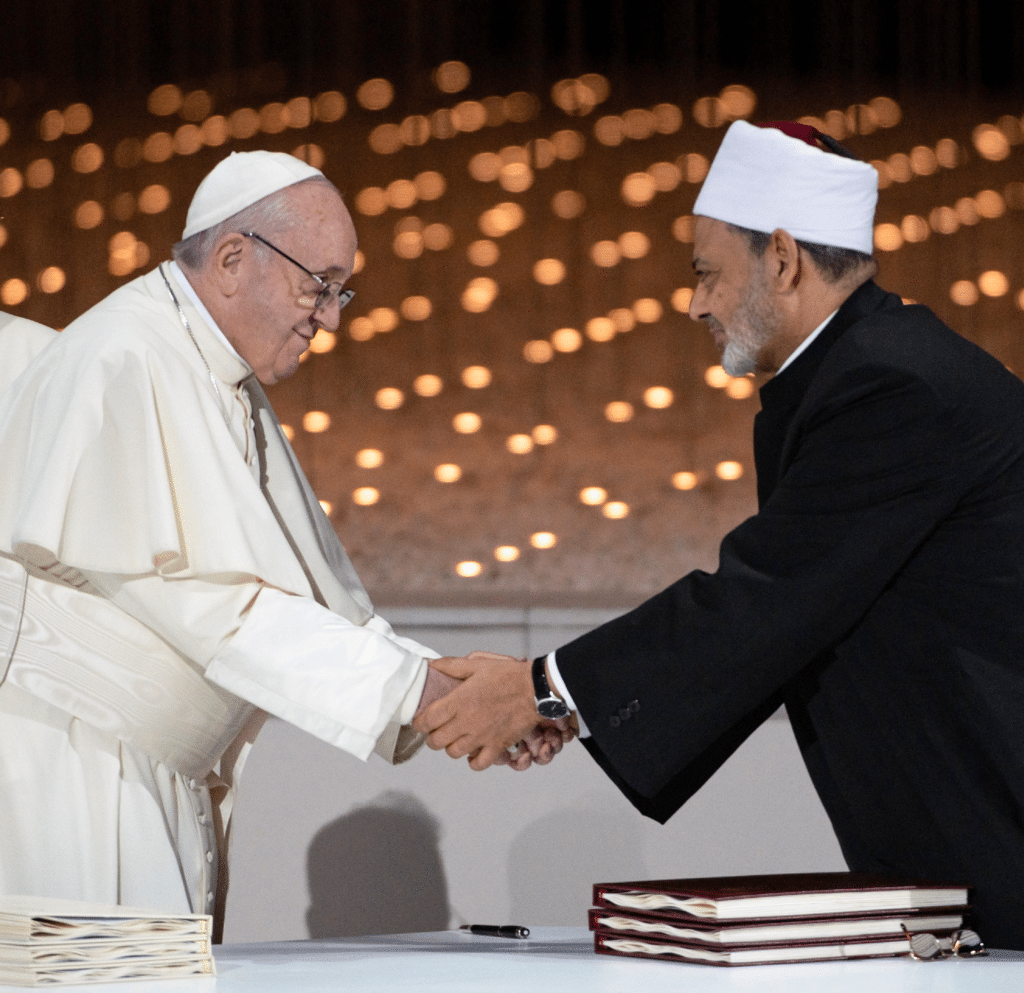
Signing of the Abu Dhabi Declaration - © Vatican Media

The purpose of the institute is :

  • to make religious, civil, social, political and media actors more aware of and more motivated by mercy and its manifestations in the world;
  • to highlight the convergences on mercy between the different religions and convictions, without ignoring the differences which constitute a real richness;
  • to promote the links between justice, mercy and human dignity and the culture of fraternity, dialogue and peace;
  • to bring together believers from different religions and spiritual traditions.
  • to propose the necessary and useful actions for knowledge, study, research, expertise, advice and training in mercy;
  • implement multi-religious solidarity initiatives and events promoting dialogue with non-religious people and structures.

Sharing the common spiritual heritage of mercy between believers and the whole of humanity is a source of renewed relationships and conversion according to divine design.

“The world would be less deserted if we could recognize a common vocation, that of multiplying the fountains of mercy […] and drinking from them mutually. (Christian de Chergé, L’invincible espérance).

Further information

Historical foundations of the Institute

The day of prayer convened by Pope John Paul II in Assisi in 1986, to which representatives of different religions were invited, was to give new impetus to interfaith relations. In 2004, and again in 2007, the Amman messages issued by Muslim scholars and religious leaders echoed the call for the authorities of the world’s churches and confessions to “rise to a common Word between you and us”.

Between these major events, and in their aftermath, meetings followed one another until the formulation and announcement of the Declaration on Human Brotherhood for World Peace and Common Coexistence, known as the Abu Dhabi Declaration.

According to this Declaration, drawn up and promoted in 2019 by Pope Francis and the Grand Imam of Al-Azhar, Ahmad al Tayyeb: “Pluralism and religious diversity… are a wise divine will, by which God created human beings” and all those who carry within them faith in God and in this Brotherhood of Man are called, like all people of good will, to commit themselves to this path of listening, mutual knowledge and collaboration. In particular, believers are invited to reaffirm the common values of their respective traditions, and to take part in actions that enable them to be shared, particularly with new generations, but also in all places where people live or make decisions.

The Abu Dhabi Declaration is also an emphatic reminder that it is by His Mercy that God created the World(s) and the creatures who live in it in their dignity.

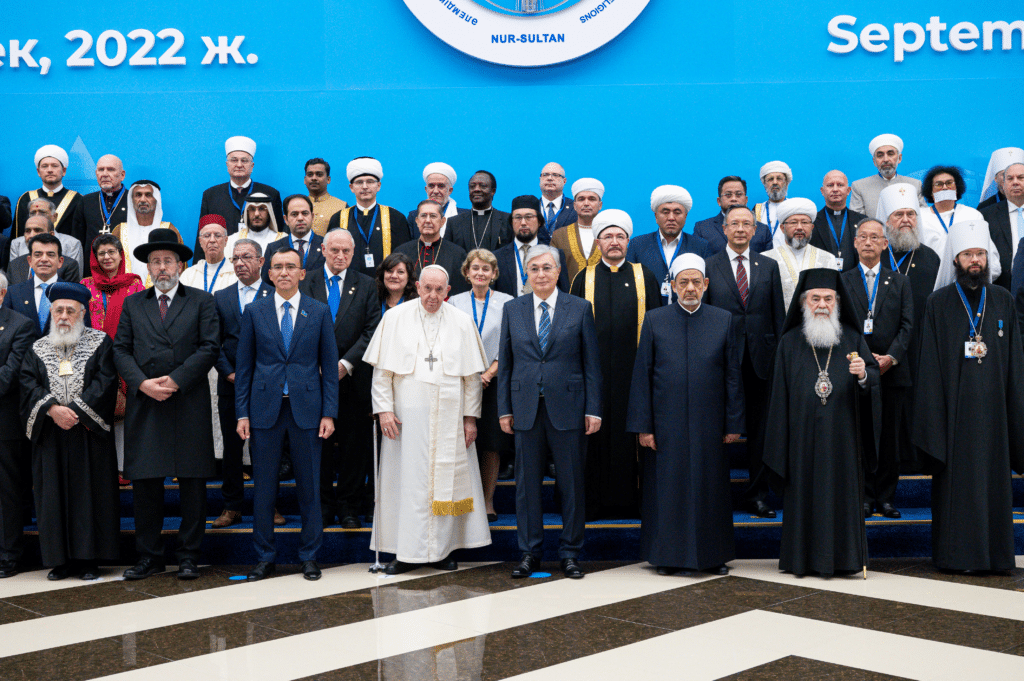
Astana Congress - © Vatican Media

In September 2022, at the Congress of Leaders of World and Traditional Religions in Astana (Kazakhstan), in the presence of Pope Francis, this Declaration was approved by all the leaders of all the other religions (Jews, Hindus, Buddhists, Taoists and other spiritual leaders).

Mercy manifested in conjunction with justice, through the plurality of religions but also their convergence, is the only thing likely to be an antidote to violence, terrorism and attempts to use them for ends that are foreign to them, and to be the guarantor of human brotherhood.

To this end, Pope Francis, inspired by the Year of Mercy (Misericordiae vultus, XXIII)), has instituted in the Constitution of the Holy See itself, the commitment to work in the service of Mercy in a multi-religious perspective, and has projected the means of implementation (Constitution Praedicate Evangelium, 59-60).

The harmony of justice and mercy gives rise to authentic encounters and relationships between believers of different religions. Mercy opens the door to relationships of fraternal depth (cf. Inauguration of the Silaturahim Tunnel and Istiqlal Declaration in Jakarta, September 6, 2024).

Today, as a follow-up, Pope Leo XIV invites us to build bridges, demonstrate synergies, work together and embrace diversity as a source of mutual enrichment for lasting peace.

The Institute's multi-religious spiritual scope and influence

Mercy is a spiritual reality present, in fact, in all religious traditions (Celebrating Mercy with Believers of Other Religions, Vatican, 2016). Each tradition manifests it in its own diverse expressions and forms.
Mercy unfolds in the world, where every creature has the same dignity and the same need to weave bonds.
It is therefore advisable to foster the expression of Mercy, which is at the origin of the various spiritual and religious traditions, and constitutes a place and a link enabling both :

  • its manifestation in that it connects us to God, or Ultimate Reality;
  • highlighting the convergences that are expressed in each religious form, with respect for each one, without syncretism, but with the awareness that differences constitute a Mercy from God, inviting us to contemplate and deepen His mysterious plan;
  • the sharing of this common and transformative heritage between religious actors and towards every component of humanity in a spirit of justice, fraternity and peace.

The Institut Multireligieux de la Miséricorde is fully in line with the principles and values outlined above, and with the actions encouraged by the Abu Dhabi Declaration.

Visions & objectives

Our vision

Our vision emphasizes the alternation of Justice and Mercy, complementary forces that guide humanity towards reconciliation and solidarity. Justice ensures fairness and accountability, while Mercy transforms relationships through forgiveness and compassion, reflecting the sacred dignity inherent in every person. Through this project, we aim to facilitate the role of religions in interfaith dialogue, fostering fraternity through the witness of divine mercy. Together, we envision a world where justice and mercy harmonize to overcome divisions, alleviate suffering and inspire charity, charting a common path towards peace, hope and fulfillment for all.

Our objectives

The aim is to express, through the respective religious doctrines, the fruitfulness of Justice and Mercy in all our relationships. This Initiative for Mercy (IoM) offers research, training and consultancy activities, in a multi-religious format inspired by the High Committee for Human Fraternity and the Abrahamic Family of Abu Dhabi. A scientific committee contributes to the development of this network, with the ambition of reaching out to the peripheries through cultural centers and multi-religious Witnesses of Mercy around the world. "We urgently need to enter into mutual mercy. A "common word" from God invites us to do so. Indeed, it is the richness of His mercy that is revealed when we humbly open ourselves to the teachings offered by the other's faith, and even more, to the way they live it. This exodus towards the other cannot divert us from the Promised Land, if it is true that our paths converge when the same thirst draws us to the same source. Can we quench each other's thirst? We'll know by the taste of the water. True living water is that which no one can make gush forth or hold back. The world would be less deserted if we recognized a common vocation: to multiply the fountains of mercy along the way. And how can we doubt this common vocation if we let the All-Merciful call us to a single table, the table of sinners? O people of the Book, let us come to our common vocation. God's treasure is a Bread to be savored only with the multitude. (Blessed Christian de Chergé, Tibhirine, Algeria)
CELEBRATING MERCY BETWEEN BELIEVERS OF DIFFERENT RELIGIONS

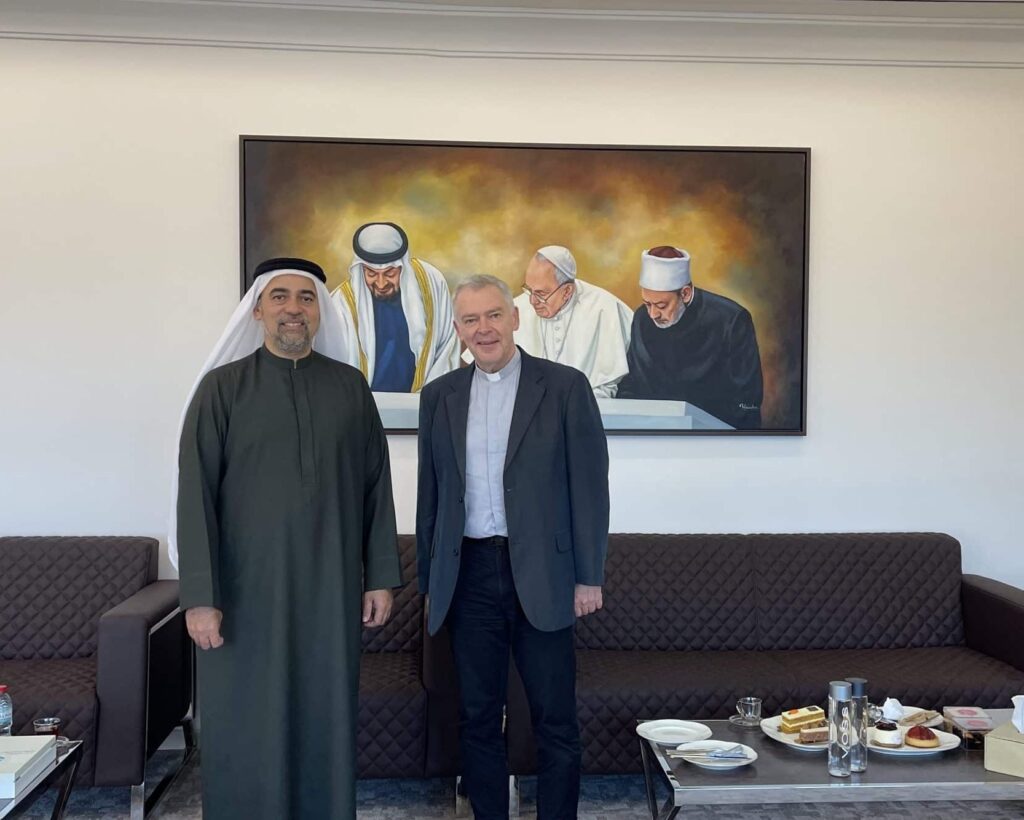
Meeting with the High Committee for Human Fraternity

Official documents on mercy between believers of different religions

“Celebrating mercy with believers of other religions” – Rome 2016

“Celebrating Mercy with Believers of Other Religions” is a concise and simple collection published by the Pontifical Council for Interreligious Dialogue.

“The Call of the 138 Muslim Sages” or “A common word between you and us” – Amman 2007

The “Open Letter and Appeal of the 138 Muslim Wise Men” (2007), or “A common word between you and us”, is an appeal based on love of God and love of neighbor, which form a common basis for the Abrahamic religions.

Dabru Emet” (A sincere dialogue) – 2002

“Dabru Emet” emphasizes the love of God and love of neighbor at the heart of rabbinic Judaism.

“Misericordiae Vultus” – Rome 2015

With this letter, the Pope invites the entire Catholic Church to prepare for the great Jubilee Year of Mercy (2016). He insists on “a culture of mercy” facilitated by interreligious dialogue.

Article 23 recalls the importance of mercy as a link with other religions, in particular Judaism and Islam.

“Abu Dhabi Declaration – Abu Dhabi 2019

The declaration was prepared at length by Pope Francis and Sheikh Ahmad Al-Tayyeb, Grand Imam of Al-Azhar University. It emphasizes the importance of the two pillars of Justice and Mercy for the deployment of human brotherhood.

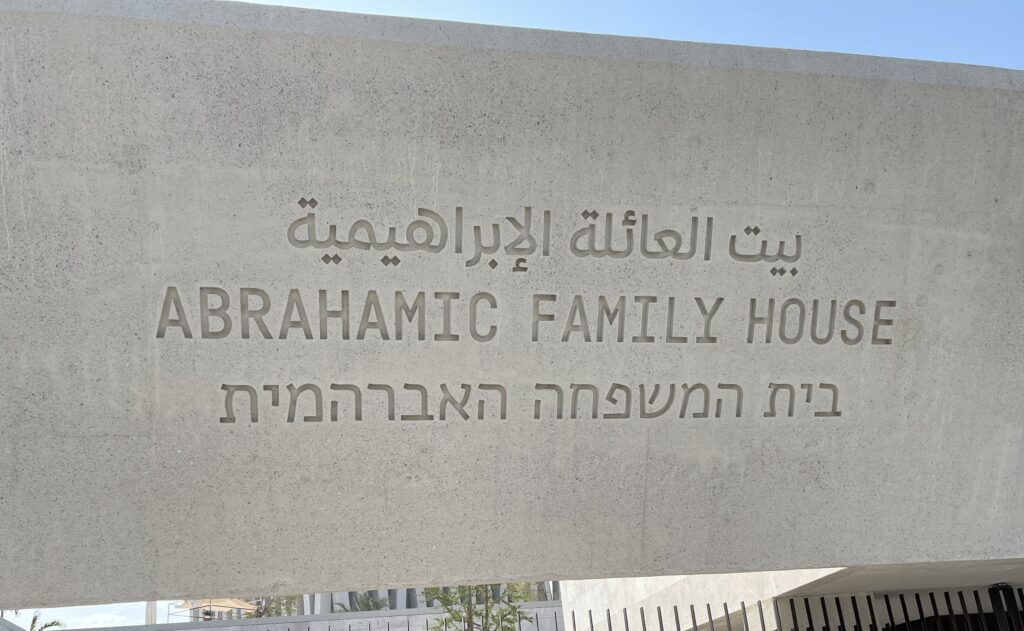
Following this declaration, the “Abrahamic Family” shared space was created, comprising three magnificent places of worship: a synagogue, a church and a mosque, where visitors from all over the world are welcomed.

“Istiqlal Joint Declaration – Jakarta 2024

On his last apostolic journey, Pope Francis took part in the inauguration of the Silaturahim underground tunnel. commonly translated as the “Tunnel of Friendship”, linking the Istiqlal Grand Mosque to Jakarta Cathedral. This passage symbolizes the depth of authentic relations between religions.

On this occasion, Grand Imam Nasaruddin Umar and Pope Francis signed the Declaration.

“Final Declaration of the Dicastery for Interreligious Dialogue on the occasion of the symposium between Buddhists and Christians” – Bangkok 2023

The theme of the symposium was: “Karuṇā and Agape in Dialogue for Healing a Wounded Humanity and the Earth (Compassion, Mercy and Love in Dialogue for Healing a Wounded Humanity and the Earth).

“Christians and Hindus: building peace in Truth, Justice, Love and Freedom” – Rome 2023

This is a message from Christians to Hindus for the festival of “Deepavali” in 2023, encouraging them to work together to build a new civilization on the pillars of Truth, Justice, Love and Freedom.

Our links and network