INSTITUTE ON MERCY

Justice and mercy for human FRATERNITY

The Institute on Mercy draws its inspiration from the importance that the world’s different spiritual traditions attach, in original ways, to the articulation between justice and mercy. Its creation follows on from the Abu Dhabi Declaration on Human Fraternity, co-signed in 2019 by Pope Francis and the Grand Imam of Al-Azhar Ahmad Al-Tayyeb, and subsequently recognized and extended by major religious traditions at the Astana meeting in 2022.

The Institute intends to highlight “justice and mercy as two inseparable pillars” of authentic fraternity, founded on recognition of the inalienable dignity of every human person. Through research, meetings, teaching and multi-religious witness, it aims to contribute to the emergence of a culture of encounter, on Mercy and peace.

“The world would be less deserted if we could recognize a common vocation, that of multiplying the fountains of mercy […] and drinking from them.

(Christian de Chergé, L’invincible espérance).

WIMJM 2027

World Interfaith Meeting
on Justice and Mercy

Bali - Indonesia

in collaboration with the Vatican Dicastery for Interreligious Dialogue

OUR EVENTS

Buddhism

In progress

Christianity

THEOLOGICAL MANIFESTO
Mercy as a theology of hope

Confucianism

In progress

Hinduism

In progress

Islam

MANIFESTO

Judaism

THEOLOGICAL & ANTHROPOLOGICAL MANIFESTO
Justice & Mercy in Judaism

Taoism

In progress

Support our projects

The Institute’s first project is to organize the World Interfaith Meeting on Justice and Mercy (WIMJM 2027) in Bali in the spring of 2027, and to initiate the process of multi-religious witness to mercy for the benefit of the most disadvantaged on the islands of Flores, Lombok and Bali.

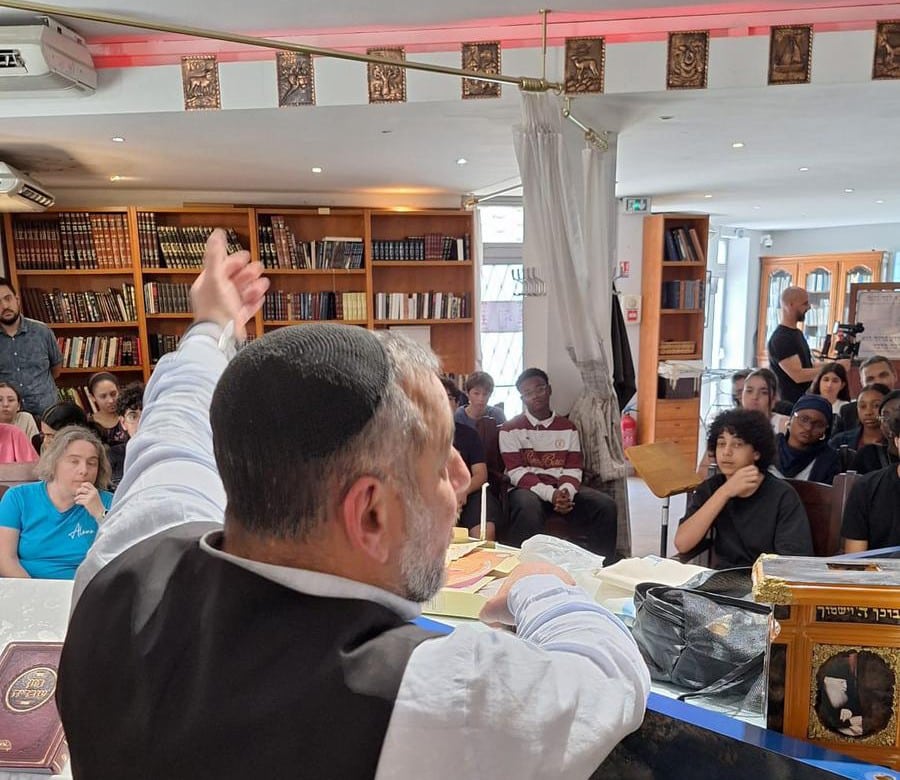
Young people meet our Rabbi Haïm in Marseille

Frequently asked questions

It is a platform that offers support and encounters for interfaith dialogue and human brotherhood through spiritual or academic research, training by teachers from several spiritual traditions and multi-faith witness.

  • To all people of good will

and also :

  • religious and spiritual leaders
  • academics and researchers
  • educators and training managers
  • to those working for social justice and peace
  • young leaders and emerging voices
  • institutions and organizations involved in dialogue